In the context of how to start working out no motivation, the harsh reality about motivation is that it’s not necessary to get started; it’s a consequence of starting. Don’t wait until you feel like exercising, and when you feel like it, it’s too late!
If you are having a problem deciding on how to begin your fitness routine and you don’t feel like it, that doesn’t mean you are broken. You are having a completely natural neurological phenomenon, and once you are familiar with it, you can do what your brain does or how it does it, rather than against it.
This guide will provide you with a practical and psychology-based system for starting an exercise routine when motivation is at zero and slowly creating something sustainable over time.
Exercise Motivation Tips for Beginners: Why Motivation Is the Wrong Starting Point
Most people’s motivation action model is: feel good, take action, see results. However, this model is not working very well in the first place; motivation is sporadic, difficult to predict, and out of your hands, like sleep quality, stress levels, mood, weather, etc.
The proper model is based on behaviour science and is as follows: take action (small), experience success, build motivation. Motivation comes before action, not the other way around! This is the most crucial exercise motivation trick for beginners and the basis for all the rest.
Neuroscience: When you do small, successful actions, dopamine is released. Dopamine is responsible for reinforcing the behaviour and motivating the repetition of it. The motivation is created by doing the thing, rather than thinking about doing the thing, and at the smallest scale possible.
The Zero-Motivation Starting Protocol
This protocol is specifically for the days (and weeks!) when motivation is lacking. If you are struggling with how to start working out no motivation, this 3-stage protocol will help. It comes in three stages:
Phase 1: Absurdly Small Starts (Weeks 1–2)
The initial step must be something that you can’t really afford not to take. We’re talking about putting on your exercise shoes and getting off the couch, walking from your street to the end and back, or doing 5 push-ups.
This isn’t a joke, but this is the mechanism. The purpose of Phase 1 is not to get fit; it is to establish identity. Each time you fulfill the smallest exercise action, you vote for “I am somebody who exercises. Every time you perform any of these small exercise actions, you vote for the identity of “I am somebody who exercises. Those votes accumulate.
The 5-minute rule: Commit only to five minutes. Tell yourself you can stop after five minutes if you want to. Almost nobody stops at five minutes, but knowing you can removes the resistance to starting.
Phase 2: Habit Anchoring (Weeks 3–4)
After being at the small level for 14 days, tie your exercise to an existing anchor. If I can, I will [exercise action] after [trigger].
Examples: I do 10 squats after I make my coffee in the morning. Once I am done eating lunch, I go for a 10-minute walk. Once I change out of work clothes, I get a 7-minute exercise. The trigger removes the need to think about how to get motivated to exercise on any given day; just follow the chain.
The secret to being motivated to exercise is that you don’t create motivation out of thin air. The trigger system is created so that the motivation requirement is completely removed.
Phase 3: Building Momentum (Weeks 5–8)
By week five, the habit anchor is established, and small successes have begun generating their own motivational momentum. This is the window to gradually increase duration, intensity, or frequency, but only gradually. A 10–15% increase per week is the research-supported maximum for sustainable progression.
At this stage, the focus shifts from ‘getting started’ to ‘not missing’. The identity is consolidating. The habit loop is running. Your job is simply not to break the chain.
How to Get Motivated to Workout?
Your environment is either working for you or against you. Most people’s home environments passively discourage exercise: workout gear is buried in a cupboard, there is no clear space to move, and the sofa is the most accessible option.
Three environmental changes that meaningfully increase exercise follow-through:
- Leave your workout clothes visible and ready: on your bed, by the bathroom door, or on the kitchen chair. Seeing them is a cue; having to retrieve them is friction.
- Create a dedicated movement space, even a small cleared area with a mat. Space signals purpose. A corner of your living room works fine.
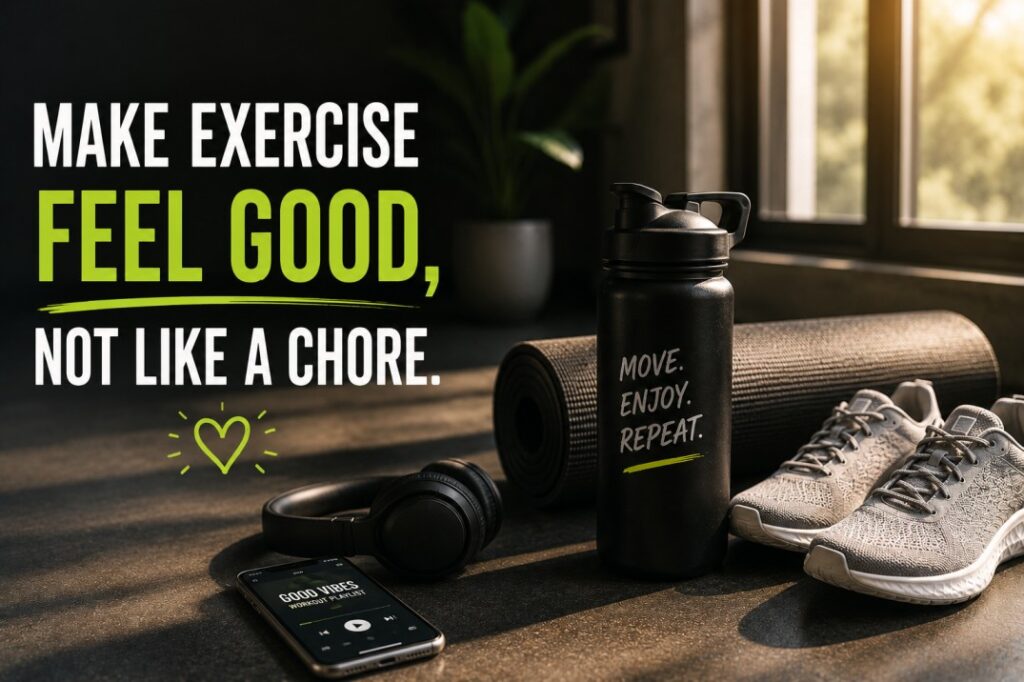
- Reduce entertainment friction during workouts: have your workout playlist or podcast queued before you start. Remove the setup steps that become excuses.
Starting Fitness With Low Energy: The Role of Timing and Nutrition
One underappreciated aspect of starting fitness with low energy is that low energy is often the symptom, not the cause. Poor sleep, dehydration, blood sugar instability, and sedentary behaviour all contribute to the feeling of fatigue that makes starting exercise feel impossible.
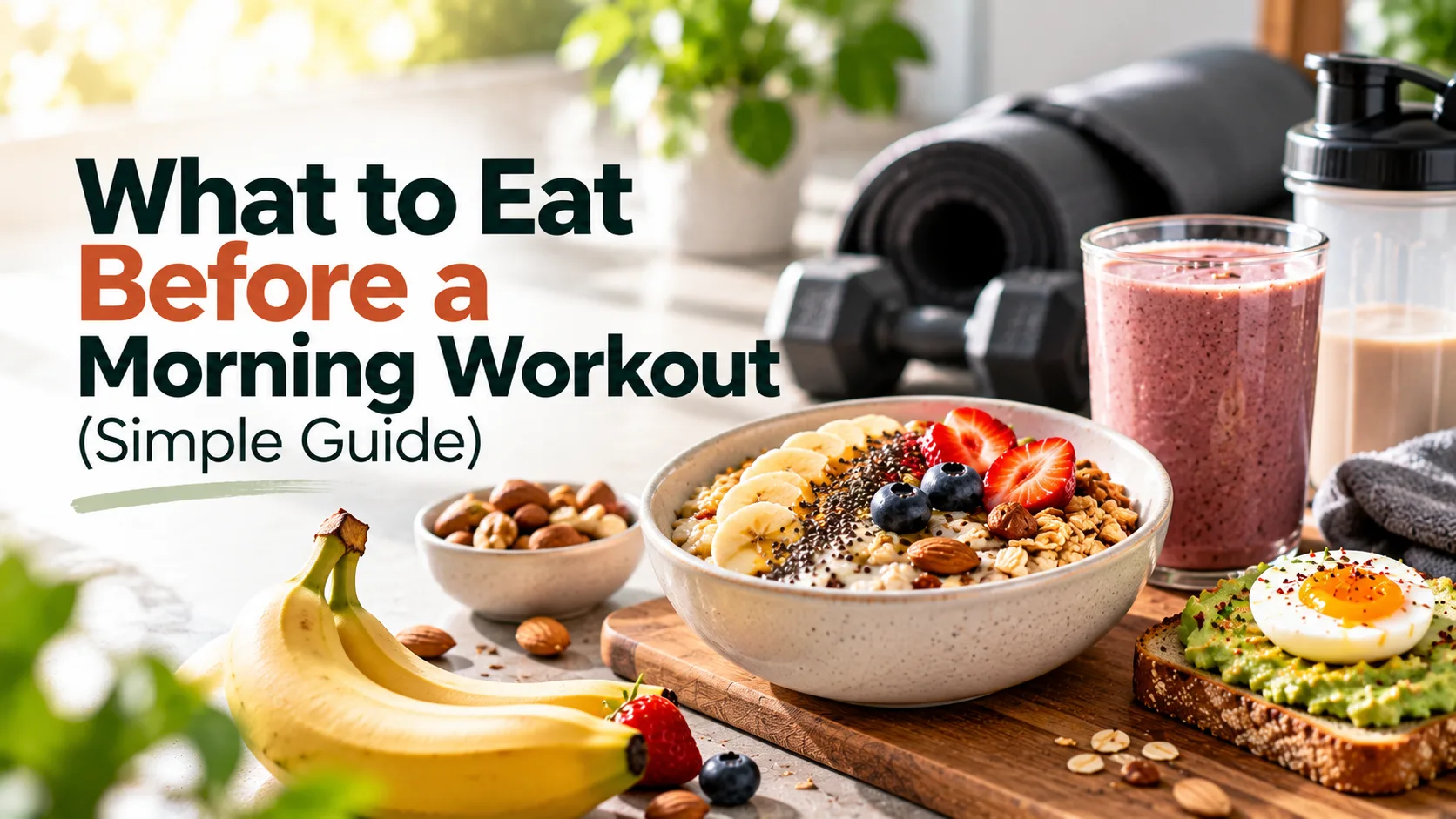
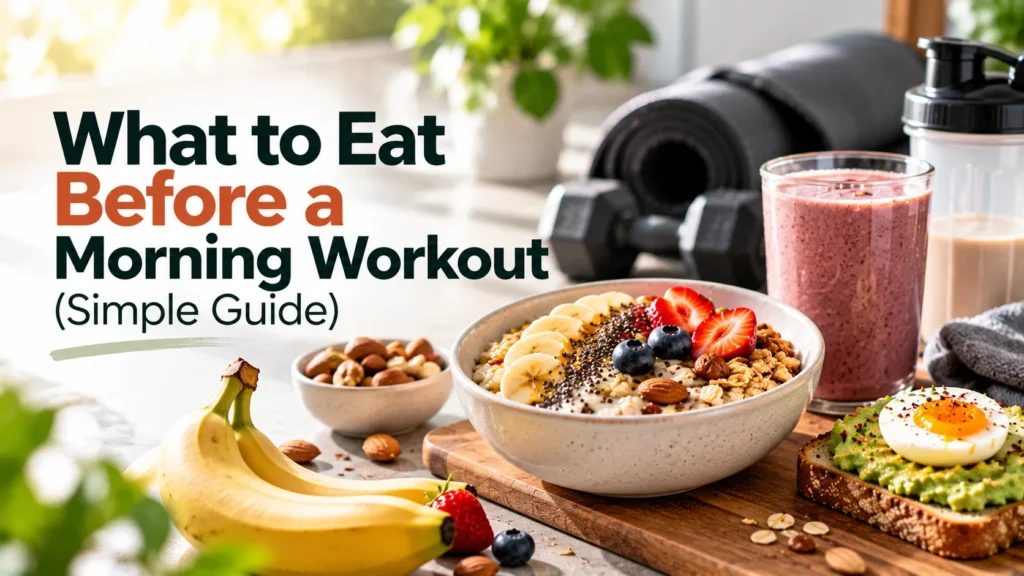
Three nutritional adjustments that improve exercise energy for beginners: drink 400–500ml of water before any workout (even mild dehydration reduces perceived exertion significantly); eat a light carbohydrate snack 30–60 minutes before exercise if fasted (a banana, handful of oats, or rice cake); and avoid exercising in the post-lunch energy trough (1–3 PM for most people) until the habit is established.
The good news about starting fitness with low energy: Exercise itself is the most effective solution to low energy. Studies consistently show that even a single 20-minute moderate-intensity workout significantly increases energy levels for two to four hours afterward. The cure for feeling too tired to exercise is, paradoxically, to exercise.
What to Do When You Fall Off the Wagon
You will miss sessions, possibly even entire weeks. The response to the missing is more important than the missing itself. The research-backed protocol is to return with the smallest possible action on Day 1. Not your hardest workout to compensate, but your easiest: a 10-minute walk, five push-ups, or anything that re-establishes the identity.
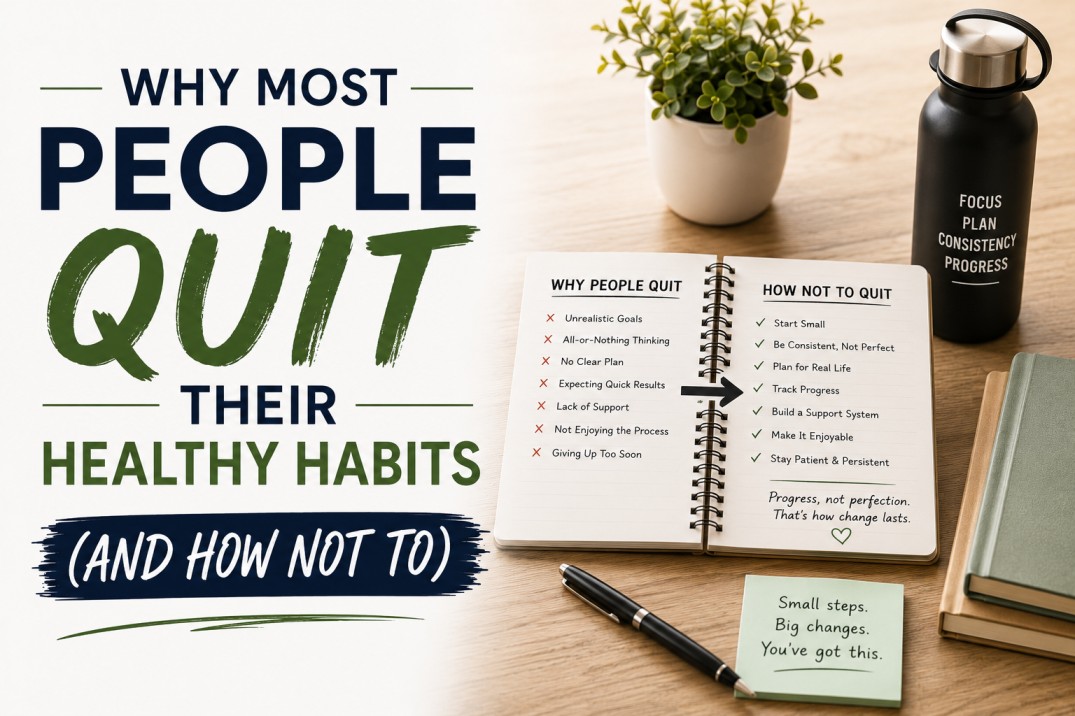
Never miss twice. One miss is an accident. Two consecutive misses are the beginning of a new pattern. This single rule, applied consistently, prevents the spiral from a temporary setback to permanent abandonment that characterises most abandoned fitness attempts.
Conclusion
The most important insight about how to start working out no motivation is this: motivation follows action; it does not precede it. The path to feeling motivated to exercise regularly is to start exercising, at the smallest, most friction-free scale possible, and let the neurological reward system do the rest.
You do not need to feel ready. You do not need to feel motivated. You need to put on your shoes. Everything else is built from that first step.
At GrowHealth, we meet you where you are, not where you think you should be. Browse our guides on tiny habits, morning routines, and staying consistent for a complete beginner’s system.
FAQ
How do I force myself to work out when I don’t want to?
Do not force reduce. Make the commitment so small that resistance collapses. A five-minute commitment, done consistently, builds the identity and generates the motivation that a forced 60-minute session never will. This is the core principle of exercise motivation tips for beginners.
What is the best exercise to start with when you have no motivation?
Walking is consistently the best starting exercise for low-motivation beginners. It requires no equipment, no skill, and no gym membership, and it produces immediate mood improvement from endorphin release, which directly addresses the motivation deficit.
How long does it take to start enjoying exercise?
Most people begin experiencing consistent post-exercise mood improvement (the primary driver of exercise enjoyment) after two to four weeks of regular activity. Genuine enjoyment of specific activities typically develops over six to twelve weeks as skill, fitness, and social context build. Starting fitness with low energy is normal; it improves dramatically and quickly once the habit is underway.