It’s not that Monday is the time for motivation; it is. The optimal time to begin a fitness challenge is not when everything is right; it’s this weekend, with what you’ve got, right where you are. Time is the best guarantee to never start by waiting for the ‘right moment’.
Simple fitness challenges do not involve expensive gear, gym membership, or hours of leisure time. They need a choice, a beginning, and enough guidance to keep them moving forward, day by day.
To help you establish a healthy lifestyle, here are 5 challenges you can actually start this Saturday, no matter your fitness level.
Easy Fitness Challenges to Start: Why Challenges Work Better Than Goals
A fitness objective is: lose 10 lbs. People are going to take a fitness challenge: walk 30 days in a row. The distinction matters. Goals are binary, far off, and easily disheartened. Challenges are processes that are daily and attainable and are designed to yield a win each day.
Process-based commitments lead to better adherence than outcome-based goals, as confirmed by research in behavioural science, especially at the outset. When choosing easy fitness challenges to start, there is also a level of social and gamification when you’re not trying to lose weight, you’re doing the challenge!
The 5 challenges below are listed in an ascending order of intensity; begin at the comfortable level
Challenge 1: The 7-Day Daily Walk Challenge
Duration: 7 days. Daily commitment: 20–30 minutes of walking. Equipment: none. Difficulty: absolute beginner.
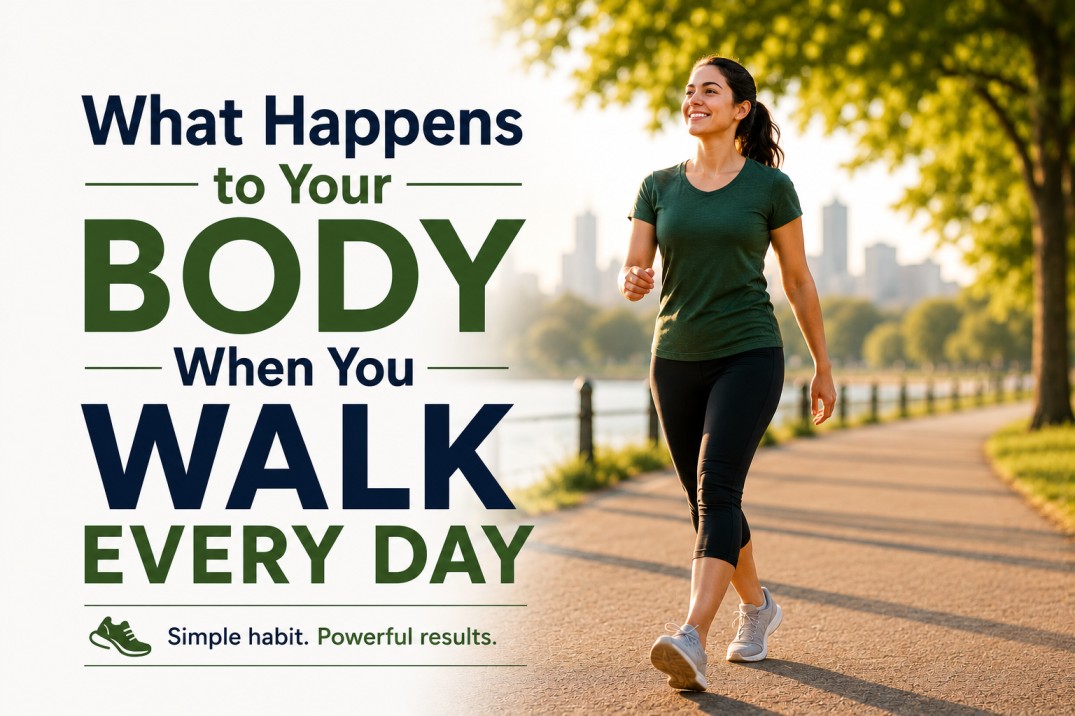
It’s the easiest entry-level weekend exercise challenge and one of the most proven in the scientific literature! This is because walking for 20-30 minutes a day helps to improve the fitness of the heart and circulatory system, regulate blood glucose, improve mood, and sleep quality within 7 days of regular exercise.
The rules are simple: walk every day for seven days. Time of day does not matter. Route does not matter. Pace does not matter. Completion is the only metric. At the end of seven days, extend to 14, then 21. Most people who complete the first seven days continue because the daily mood boost becomes self-reinforcing.
Weekend start: Walk on Saturday morning before checking your phone. The combination of light exposure, movement, and screen-free time sets a powerful tone for the day.
Challenge 2: The 30-Day Push-Up Progress Challenge
Duration: 30 days. Daily commitment: 5–20 minutes. Equipment: none. Difficulty: beginner to intermediate.
Start on Day 1 with however many push-ups you can do with good form, even if that is two. Add one push-up every two days. By Day 30, you will have meaningfully improved upper body strength, established a daily exercise habit, and discovered that progressive overload works exactly as the research promises.
This is one of the most popular 30 day fitness challenge ideas because it has a built-in progression mechanism you can see the improvement numerically every few days. That visibility of progress is one of the most powerful motivational reinforcers in behaviour change research.
Beginner modification: Start with knee push-ups or hands-elevated push-ups against a wall or bench. Perfect form at a lower difficulty beats poor form at a higher one every time.
Challenge 3: The Weekend Workout Challenge 8 Weeks to Consistency
Duration: 8 weekends (16 days of actual training). Weekly commitment: Saturday and Sunday, 25–30 minutes each. Equipment: none required.
This challenge is designed for people who struggle with weekday workouts due to work or family commitments. Two weekend sessions per week, consistent for eight weeks, are sufficient training stimulus for beginners to produce measurable strength and cardiovascular improvement.
These weekend workout challenges work on an alternating A/B structure: Saturday is lower body and core (squats, lunges, glute bridges, plank), Sunday is upper body and cardio (push-ups, rows, jumping jacks, mountain climbers). Weeks progress by adding reps or sets every two weeks.
Progression rule: Increase total reps by 10% every two weeks. So if Week 1 is 3×10 squats, Week 3 is 3×11, Week 5 is 3×12. Small increments, consistent application, real results.
Challenge 4: The 21-Day Stretch and Mobility Challenge
Duration: 21 days. Daily commitment: 10 minutes. Equipment: a mat (optional). Difficulty: all levels.
Mobility is the most neglected component of physical fitness and the one that most affects the quality of daily life. Tight hip flexors, rounded shoulders, stiff thoracic spine: these are the accumulated effects of sedentary modern life, and they contribute to chronic pain, poor posture, and reduced athletic performance.
A daily 10-minute stretching routine targeting the five key areas, hip flexors, hamstrings, thoracic spine, shoulders, and calves, produces significant mobility improvements within three weeks. This is one of the most underrated easy fitness challenges to start because the daily investment is genuinely small and the functional benefits are immediately noticeable.
Daily sequence: Child’s pose (90 sec) → hip flexor stretch (60 sec each side) → seated hamstring reach (60 sec each side) → thoracic rotation (60 sec each side) → shoulder cross-body stretch (45 sec each side).
Challenge 5: The 30-Day Step Count Challenge
Duration: 30 days. Daily commitment: variable (walking throughout the day). Equipment: a phone or smartwatch. Difficulty: beginner.
Begin with your current average daily step count use your phone’s health app to find your baseline. Add 500 steps per week. So if your baseline is 4,000 steps, your Week 1 target is 4,500, Week 2 is 5,000, Week 3 is 5,500, and Week 4 is 6,000.
Research from JAMA Internal Medicine found that walking at least 7,500 steps per day is associated with significantly lower all-cause mortality. The step challenge is one of the most sustainable 30 day fitness challenge ideas because it integrates into existing daily life rather than requiring dedicated workout sessions and the tracking is automatic.
Step hacks: Take stairs instead of lifts. Walk during phone calls. Park farther away. Get off public transport one stop early. Each small change adds 200–500 daily steps without a single dedicated ‘workout’.
How to Track Your Challenge and Stay Accountable
Challenges without tracking are intentions. Three tracking methods that significantly improve completion rates:
- Paper calendar cross-off: mark an X for each completed day. The visual chain creates powerful psychological momentum; you will not want to break it.
- Accountability partner: Tell one person about your challenge and check in with them weekly. Dominican University research found that this increases goal achievement by 33%.
- Social commitment: post your Day 1 start publicly, even to a small audience. Public commitments activate social identity, one of the strongest behavioural motivators.
Conclusion: Start Your Easy Fitness Challenge This Weekend
The best easy fitness challenges to start share one trait: a low enough barrier to entry that starting today not Monday, not next month, is genuinely possible. Every challenge on this list meets that criterion.
Pick one. Start Saturday. Track daily. And remember that the seven-day challenge you actually complete is infinitely more valuable than the perfect 12-week programme you plan but never begin.
At GrowHealth, we believe the path to fitness starts with a single committed step. Explore our guides on building daily habits, staying consistent, and beginner workouts for the complete system. And if you are looking for 30 day fitness challenge ideas beyond this list, our blog has you covered.
FAQ
What is the easiest fitness challenge to start for beginners?
The 7-Day Daily Walk Challenge is the most accessible entry point; it requires no equipment, no specific fitness level, and no schedule change beyond a 20-minute daily walk. It is also the most likely to self-extend, as the daily mood benefits quickly become self-reinforcing.
How do fitness challenges help build long-term habits?
Challenges create a defined timeframe (which reduces overwhelm), daily completion events (which provide consistent rewards), and a specific identity (‘I am doing the challenge’), all of which are key structural ingredients for habit formation. Many people find that completing a 30-day challenge is enough to establish the behaviour as a lasting routine.
Can I do multiple challenges at the same time?
Starting with one challenge is strongly recommended, particularly for beginners. Attempting multiple fun fitness challenges for beginners simultaneously divides focus and increases the likelihood of abandoning all of them. Master one before adding another.